I Know That My Redeemer Lives and on the Last Day I Shall Rise Again
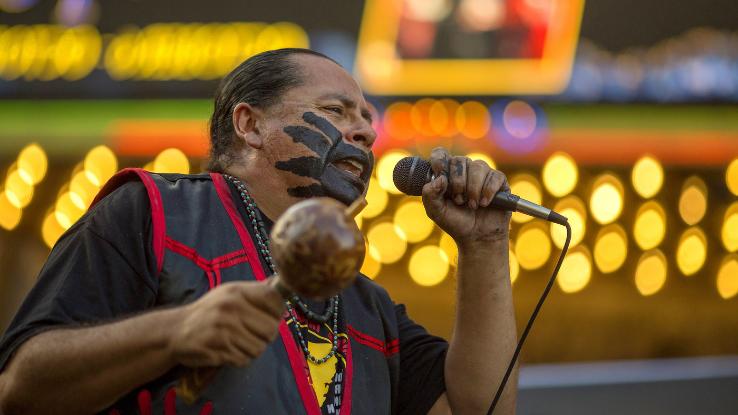
With racial justice at the forefront of our collective consciousness, in that location has arisen a growing outcry for Americans to reexamine the legacy of Christopher Columbus. In one case a celebrated pioneer in America's discovery, he has come into the spotlight again in relation to the argue over the history of systemic racism in the Us. This has led to the toppling of several Columbus statues beyond the land. The general public and city officials are also dumping Columbus Twenty-four hours to formally recognize Indigenous Peoples' Twenty-four hours, to show solidarity with Native American communities and to course-correct the narrative virtually what actually happened hundreds of years ago.
While the U.South. has historic Columbus Day since 1792, the notion to replace it started in the 1970s. Merely the momentum to remove Columbus Day has intensified each year, and there are many reasons why Native Americans and others are fighting for this change — and celebrating it.
Why Ethnic Peoples' Mean solar day and Columbus Day Are Important to Different Groups
Almost Americans used to gloat Columbus Day to honor his voyage to the Americas. But the holiday means much more to Italian Americans. The twenty-four hour period goes beyond the explorer; it symbolizes the Italians' long journey to a new land. Earlier and during the time period when Columbus Day was established, Italians experienced religious and indigenous hatred, so Italian Americans supported formalizing the vacation to honor a famous Italian as they sought acceptance and inspiration. According to New York's Columbus Citizen Foundation, Columbus Day is celebrated for "the spirit of exploration, the struggles and triumphs of immigrants who helped build the United States, and the vibrant heritage and cultural wealth of the Italian-American community."
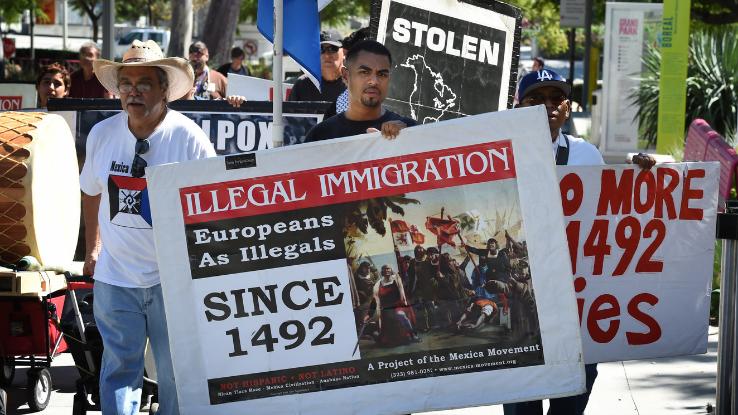
Columbus was oftentimes credited with discovering the New World and opening the doors for European exploration and colonization. However, an increasing number of states and cities accept tossed out Columbus 24-hour interval after questioning his legacy and public outcry over his "crimes against humanity" has grown. For many Indigenous communities, he was a European explorer who enslaved thousands of Native Americans, caused disease outbreaks as a outcome of his presence and led a horrifying genocide that almost wiped out Indigenous populations.
Instead of honoring Columbus, many accept proposed to gloat Indigenous Peoples' Day, which honors Native Americans, their history, their culture and their strength in the face of Columbus' and other explorers' violence. In September 2020, Arizona State Senator Jamescita Peshlakai described the holiday as "an opportunity to move the chat forward and to start really working on the inclusion of Native Americans in every part of American life and opportunity."
In 2019, Wisconsin Governor Tony Evers shared that European exploration and the country's government have long hurt Native Americans, saying, "Native Americans in Wisconsin and throughout our land have suffered unjust handling — oft at the hands of our government — and [Indigenous Peoples' 24-hour interval] is about recognizing that Wisconsin would not exist all that information technology is without Indigenous people."
In the wake of summer 2020's anti-racism protests, Columbus' legacy of enslavement and genocide sparked discussions across the state about exactly what the explorer represents and why. Many Columbus statues were taken downwards or vandalized every bit more people began to view him as a symbol of the systemic racism that's been long overdue for reexamination.
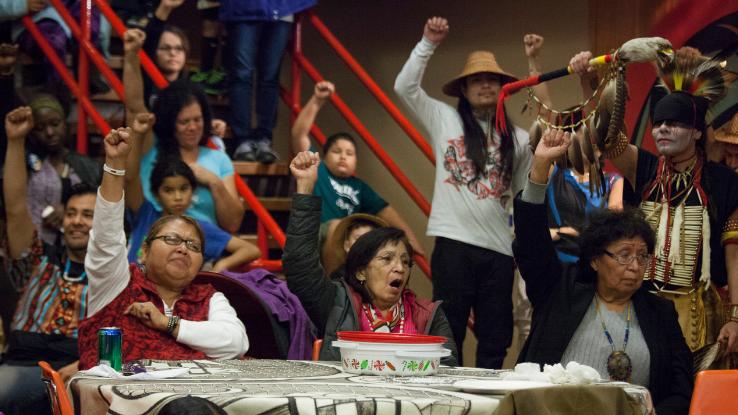
Dropping Columbus Day was get-go proposed by the International Indian Treaty Council during a 1977 United Nations conference about the discrimination Native populations have faced in America. Still, no action was taken until 1989, when South Dakota became the leading state to change the holiday's name to Native American Mean solar day. The state'due south governor, George Due south. Mickelson, worked with paper publisher Tim Giago to resolve historically bad relations between Native Americans and whites. Giago suggested removing Columbus 24-hour interval to mark the 100th Ceremony of the Massacre at Wounded Knee joint in 1990 — the year of reconciliation.
2 years later, Berkeley, California, became the first U.S. city to officially switch the holiday to Indigenous Peoples' Twenty-four hour period. The Bay Expanse Indian Brotherhood asked Berkeley Mayor Loni Hancock to make the modify to protest Europe's violent conquest of North America. A long list of states and cities followed the action in the 2010s, from Michigan to the Commune of Columbia. Some places discover Indigenous Peoples' Day under a different proper name, such as American Indian Heritage Day in Alabama.
Where Ethnic Peoples' Day Is Historic
Many states and cities now honor Indigenous Peoples' Day on the second Monday of October in lieu of Columbus Twenty-four hours. Cultural events, vigils to recognize the genocide and healing meetings are some of the ways dissimilar groups celebrate Indigenous Peoples' Day. Some states and cities encourage their residents to donate to a local tribe and engage in conversations near the mistreatment and suffering of Ethnic people at the hands of colonizers.
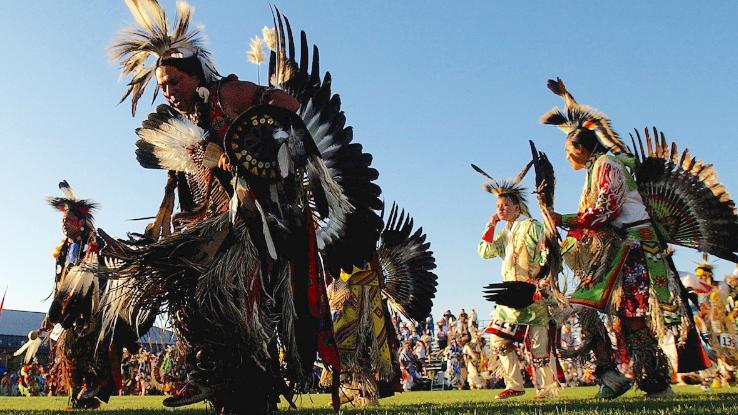
For example, Berkeley holds a pow wow and festival each twelvemonth on Indigenous Peoples' Day. Since the city established the holiday, it has likewise developed programs in schools, libraries and museums to honor and appreciate Native American history and culture.
Some states and major cities that gloat Indigenous Peoples' Day include the post-obit:
States:
- Vermont
- Maine
- New Mexico
- Alaska
- South Dakota
- Oregon
- Louisiana
- Michigan
- Wisconsin
- Due north Carolina
- Iowa
- Washington D.C.
- Minnesota
- Hawaii (Discoverers' Solar day)
Major Cities:
- Los Angeles, CA
- Seattle, WA
- Minneapolis, MN
- Denver, CO
- Eugene, OR
- Ithaca, NY
- Newark, NJ
- Tulsa, OK
- Cambridge, MA
- San Francisco, CA
- Durham, NH
- Salt Lake City, UT
- Nashville, TN
- Madison, WI
- Princeton, NJ
- Spokane, WA
- Grand Rapids, MN
- St. Paul, MN
- Phoenix, AZ
- Albuquerque, NM
- Santa Fe, NM
- Portland, OR
- Carrboro, NC
- Asheville, NC
- Amherst, MA
- Northampton, MA
- Harpers Ferry, WV
- Austin, TX
However, Indigenous Peoples' Solar day isn't recognized everywhere, and it remains a federal holiday. Some places take declined the proposal, including a northern New Jersey town that as recently as 2019 voted not to supercede the holiday, citing its importance to Italian Americans. Many areas continue celebrating Columbus Mean solar day, with major parades normally held in Cleveland, Pittsburgh and New York City.
Although the movement for officializing Ethnic Peoples' Day has led to state-level changes across the country, at that place are still many places that recognize Columbus Mean solar day. But the movement to reconsider Columbus' legacy in American history is growing, and the current trend of changing the holiday says a lot about the direction the land is heading in. More people are re-evaluating who or what they believe is worth celebrating. This is of import considering it empowers mistreated groups, giving them a phonation and the recognition in American history they rightly deserve.
Source: https://www.ask.com/culture/indigenous-peoples-day-columbus-day?utm_content=params%3Ao%3D740004%26ad%3DdirN%26qo%3DserpIndex
0 Response to "I Know That My Redeemer Lives and on the Last Day I Shall Rise Again"
Post a Comment